


Section 4.2
Next Steps
Next steps to continue monitoring and expand research questions.
Next Steps
![]() Introduction
Introduction
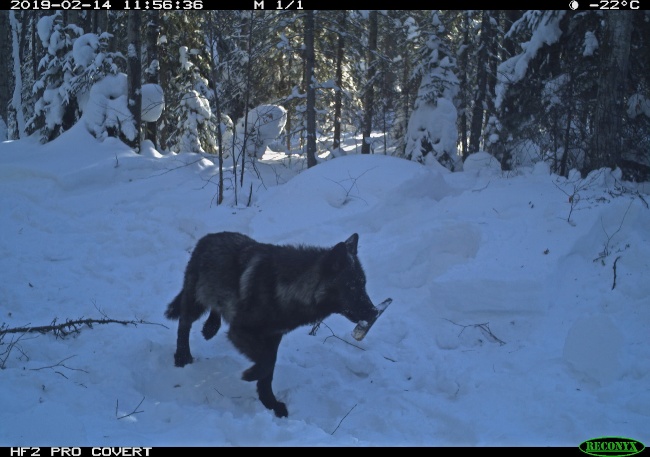
This project was set up with specific goals in mind, but camera images yielded additional interesting observations, which the community may want to pursue as part of future projects. For example, in one trapline, wolves seemed to be moving into areas after bison. This yielded questions of predator/prey relationships for wolves and bison, but also between other animals such as foxes and hares, Canada lynx and martens, and martens and squirrels.
Next Steps
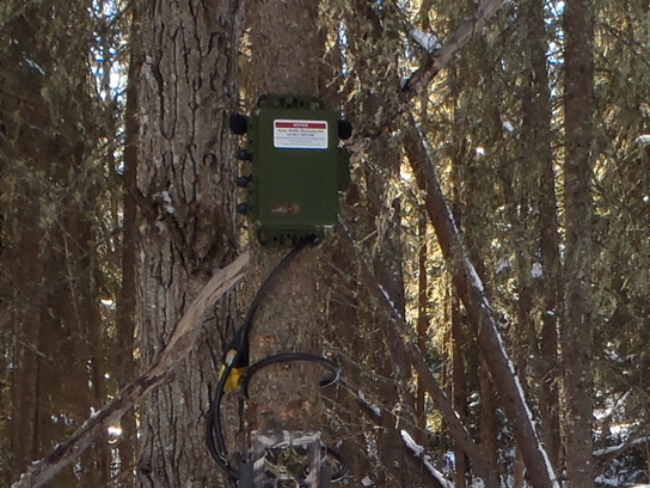
Because predator/prey relationships are often cyclical, multiple years of monitoring are needed, at least three but more if possible. To monitor the relationship between wolves and bison specifically, additional cameras should be placed in the relevant trapline and in the immediate area surrounding it. For specific questions like this, random placement may not be the most desirable; rather placement on game trails may yield the most useful data. An example of a camera grid that could be used is a 12 km x 4 km rectangle, with a minimum of 1 km spacing between ~20-25 cameras.
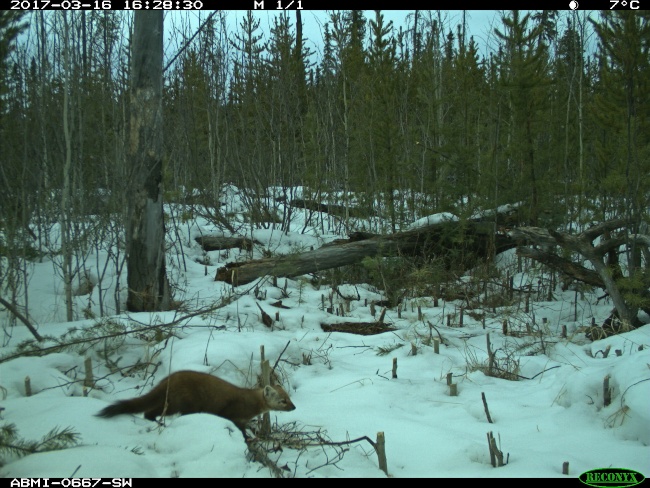
For smaller animals like marten and squirrels, different camera protocols may need to be tested. It is not clear whether cameras as they are currently deployed are reliable at detecting small-bodied animals. For instance, cameras could be placed 0.5 m off the ground instead of 1 m, or two cameras could be placed together. More work would need to be done to determine a feasible set-up that would capture the desired species.