

Section 1.2
About the Community
Introduction to the McMurray Métis community and the importance of trapping.
McMurray Métis History
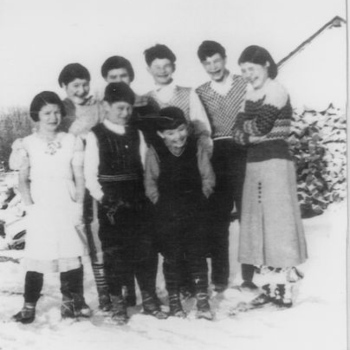
Loutitt-Kelly family photo.
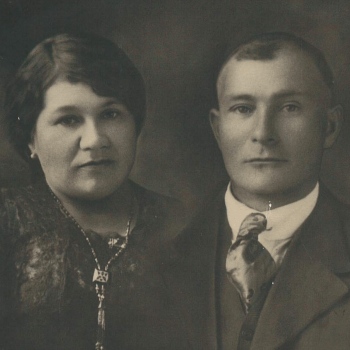
Sharp family photo.
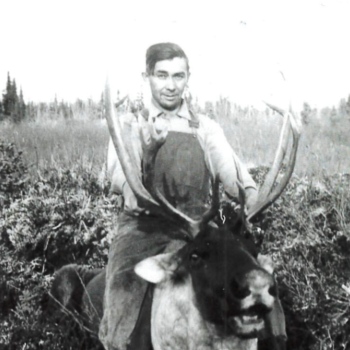
Sharp family photo.
Introduction
Video: Introduction to McMurray Métis and Trapping
The McMurray Métis is a contemporary and historic Métis community that can trace its cultural and genealogical origin to northeastern Alberta since before Effective European Control (Clark et al. 2015). McMurray Métis are organized through the self-governing Métis Local 1935, founded in 1987 under the umbrella of the Métis Nation of Alberta Association. Since at least the 1850s, community members have developed a distinctive Métis lifestyle in Fort McMurray and its surroundings. This includes participation in colonial economies, as well as continuously maintaining traditional land-use practices, including fur trapping, harvesting of food and medicine plants, hunting, and falling timber.
Fort McMurray itself has been strongly shaped by the Métis community; however, rapid industrialization and migration have transformed both the land and culture of northeastern Alberta in recent decades. As McMurray Métis continue to adapt to ecological and cultural changes, it is important to retain traditional ways of life in their territory.
History
Importance of Trapping to the Community
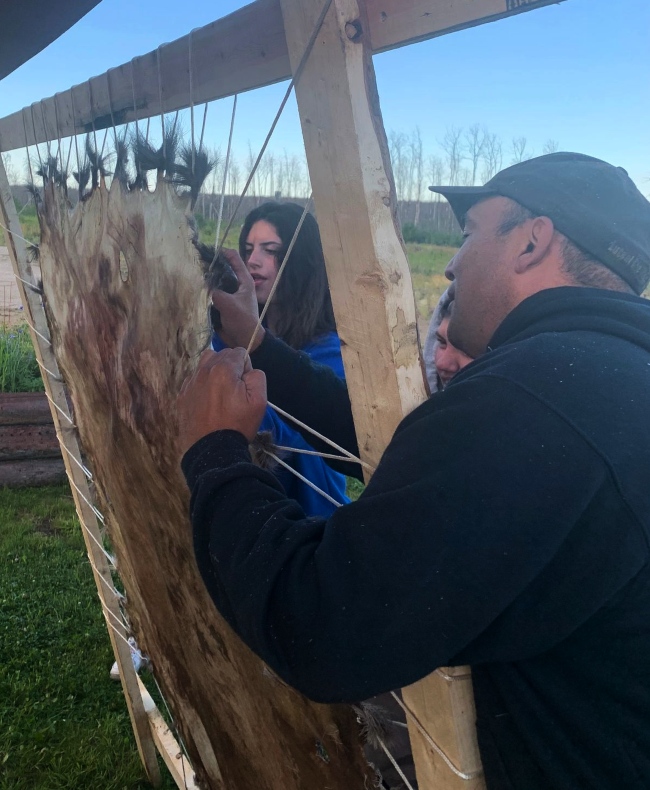
The trapline is an essential component of the McMurray Métis culture, representing a community and family place where Métis Aboriginal rights can be exercised. Prior to the 1970s, when fur prices were higher and oil development more limited, trapping was a staple economic activity for community members. In contemporary times, the overall economic importance of trapping has diminished, but it remains an important source of income for many McMurray Métis people. Beyond this, the cultural significance of the trapline is as critical as ever before. It is an essential space for transmission of intergenerational knowledge, socialization of youth, identity formation, and the continuation of family and community bonds. The trapline remains a hub for McMurray Métis harvesting practices and connection to the land.
It’s [trapping] a good thing to keep continued, to pass it on to the younger peoples, to keep up the tradition, and the trappers are actually stewards of the land, and they look after their traplines and make sure nobody’s in there poaching and stuff like that.
Harvey Sykes
History
Ancestral Nature
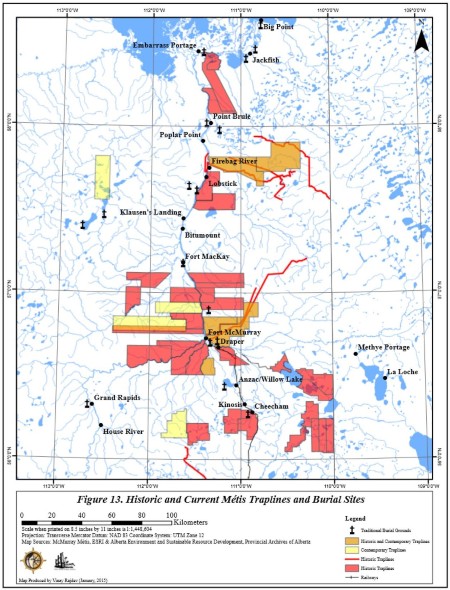
One factor contributing to the cultural importance of traplines is their ancestral nature, as it is common for trapping privileges to be passed down in a family from generation to generation within the McMurray Métis community. Many contemporary traplines regulated by the Government of Alberta, Registered Fur Management Areas (RFMAs), can be traced back to Métis traplines that existed before Effective European Control, and have been continuously trapped by McMurray Métis families since that time.
My brother and me, our trapline has been passed down from generation from father to father type stuff, the oldest one in the family always inherited the trapline. And so, then I have my own trapline next to our original one, so we have roughly 26 miles by 20 mile trapline, my brother and me.
Doug Golosky
In some cases, Alberta’s Registered Fur Management System represents a threat to this historical continuity. Traplines can be lost or coerced from Métis control, part of a broader trend of Aboriginal land dispossession typical of settler colonialism.
References
Clark, T.D., D. O’Connor and P. Fortna. 2015. Fort McMurray: Historic and Contemporary Rights-Bearing Métis Community. Unpublished report prepared for McMurray Métis (MNA Local 1935), Fort McMurray, Alberta. https://www.academia.edu/14943775/Fort_McMurray_Historic_and_Contemporary_Rights-Bearing_M%C3%A9tis_Community. (Last accessed 12 January 2018).